The missing dimension in how we talk about food.
We measure fibre in grams. But that only tells part of the story.
Microbiome science shows that fibre diversity matters alongside total amount.
Fibre Diversity Friendly™ is an independent mark that allows consumers to identify foods that provide meaningful amounts of genuinely different fibres.
Follow our latest activities on Instagram
Find Fibre Diversity Friendly-certified products at:

Fibre is far more diverse than most of us realise.
Fibre from one food can be very different to fibre from another.
There are more than a dozen families. Different crops contain different fibres. Different parts of a plant do too.
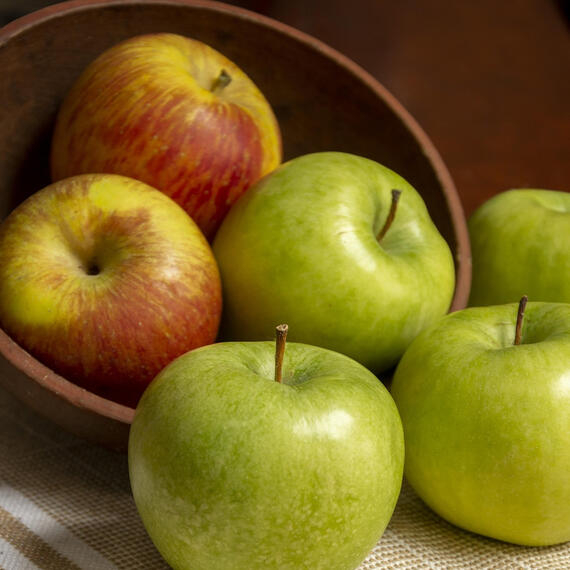
Fruit
Fruits contain pectins—the fibres that help give jams and jellies their texture.
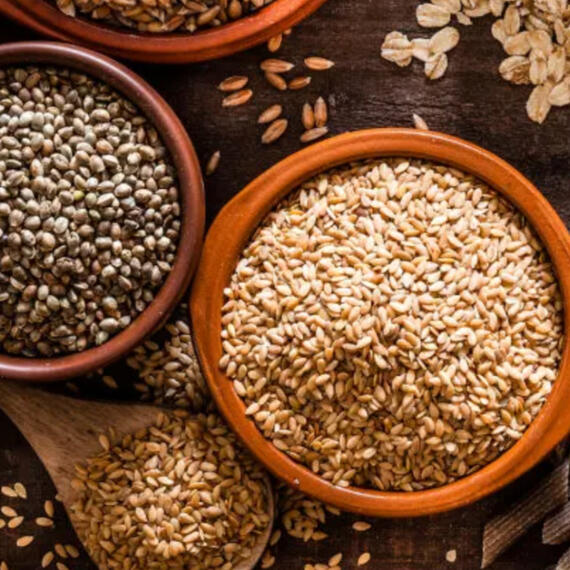
Whole grains
Whole grains provide structural fibres including cellulose and xylans.
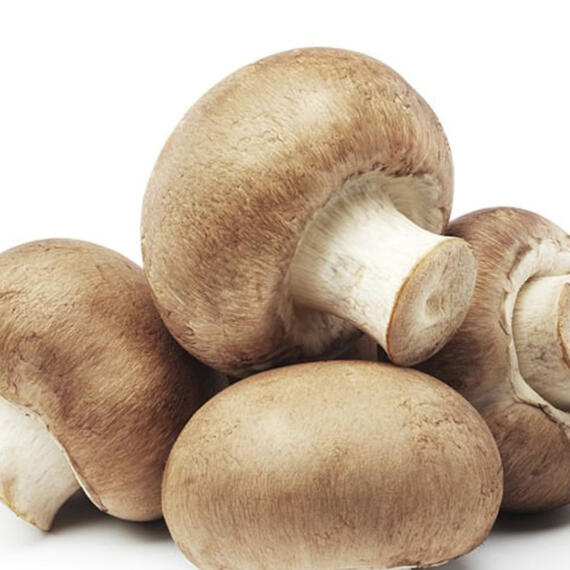
Mushrooms
Mushrooms contain chitin, a distinctive fibre not found in plants.
Different fibres feed different gut microbes.
Microbiome diversity matters for health.
The diversity hidden inside the word “fibre” can shape which microbes are able to thrive and what they produce.Getting enough fibre matters. But quantity is not the whole story.
Fibre diversity is not in nutrition tables
The number of grams of fibre a food contains tells you nothing about the diversity of fibres.
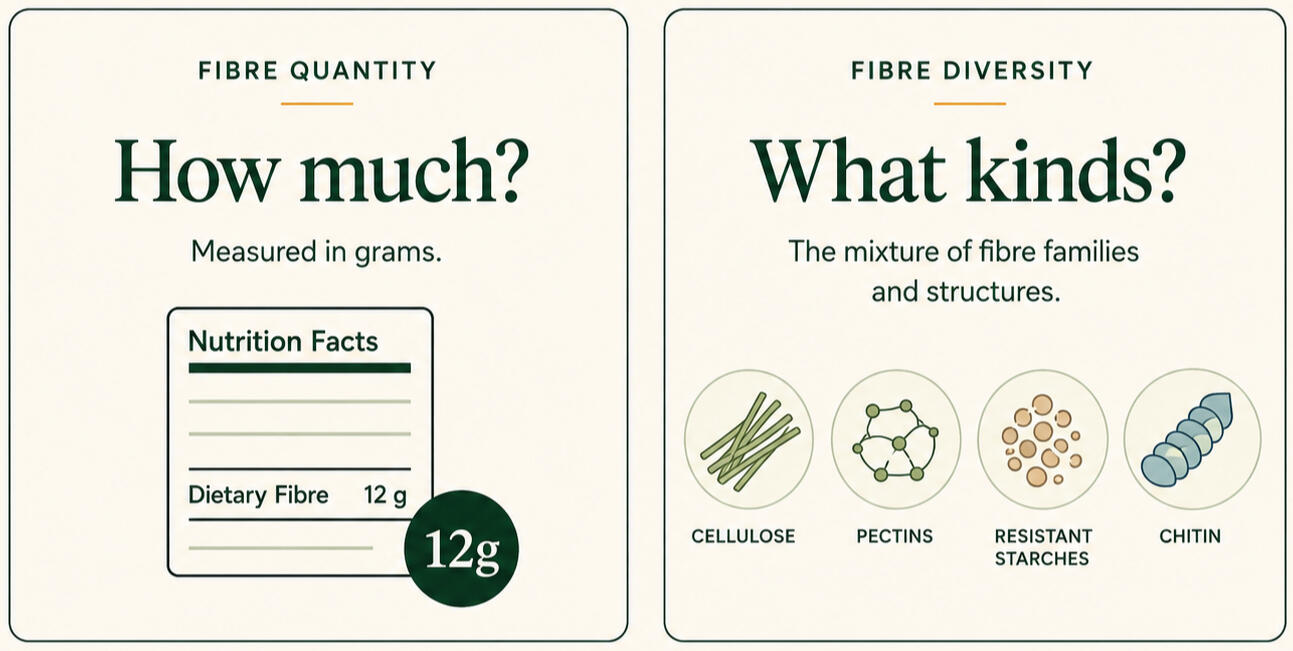
Fibre Diversity Friendly™ makes that missing information visible.
What the mark means
The mark means the food has been independently assessed for meaningful fibre diversity.
The standard was developed by fibre scientists and translates complex fibre composition into a clear, practical assessment.
The assessment looks for three things:
1. Total fibre
The food must contain enough fibre to be nutritionally relevant.2. Genuine fibre diversity
Its ingredients must contribute meaningfully different fibre families and structures.3. Meaningful contributions of different fibre families
Trace ingredients and decorative additions do not count towards diversity.
N.B. The mark assesses one important characteristic of food. It is not a general health rating and does not replace the importance of overall diet, fibre quantity or individual dietary needs.
How products are assessed
Our assessment uses a database of the fibre profiles of individual ingredients, compiled from scientific analyses.
The product’s overall fibre diversity is evaluated in the following way:
1. Identify fibre-containing ingredients
Each significant fibre-containing ingredient is identified. Ingredients present only in negligible amounts are excluded.2. Map the fibre fingerprint of each ingredient
The fibre families in each ingredient are mapped from our database.3. Combine fibre fingerprints to obtain a product fibre fingerprint
The result is a comprehensive assessment of the fibre diversity of the food.4. Certify if diversity meets threshold
Foods meeting the threshold may display the Fibre Diversity Friendly mark and receive a consumer-friendly explanation of their fibre profile.
FOR INDUSTRY
For retailers & brands
Bring fibre diversity to your customers — across own-label ranges, individual products or an exclusive retail launch.
Fibre Diversity Friendly works with retailers and food brands to identify qualifying products, certify them against the standard and license use of the mark. Retail partnerships can include launch exclusivity.For retailers, we can assess own-label ranges, identify qualifying products and support a coordinated launch across stores, online and packaging.For brands, we assess individual products and provide certification, mark usage guidance and consumer-facing explanations.
Interested in certification, partnerships or the science behind the mark?